
Fleet Consolidation After Acquisition

Updated: Jul 16
Private equity investment in the skilled trades continues to accelerate. HVAC contractors, plumbing companies, electrical service providers, telecom contractors, and industrial service businesses are being acquired and combined into larger regional and national organizations.
The objective is clear: create economies of scale, improve operational performance, and build stronger organizations through consolidation.
But once the transaction closes, many firms discover that one of the most difficult assets to integrate isn't financial systems or HR. It's the fleet.
Unlike accounting software or payroll systems, fleets are physical operating assets that directly influence technician productivity, safety, customer service, and operating costs. Every acquisition brings another collection of vehicles, equipment, suppliers, maintenance programs, and operating standards into the business. Without a fleet integration strategy, complexity grows with every acquisition.
Fleet Strategy Starts with the Acquisition Strategy
Fleet strategy should support the organization's acquisition model. Organizations that retain local brands often centralize vehicle procurement while allowing regional upfit decisions. Fully integrated organizations typically centralize both procurement and fleet standards.
The most successful organizations also standardize how technicians work inside the vehicle.
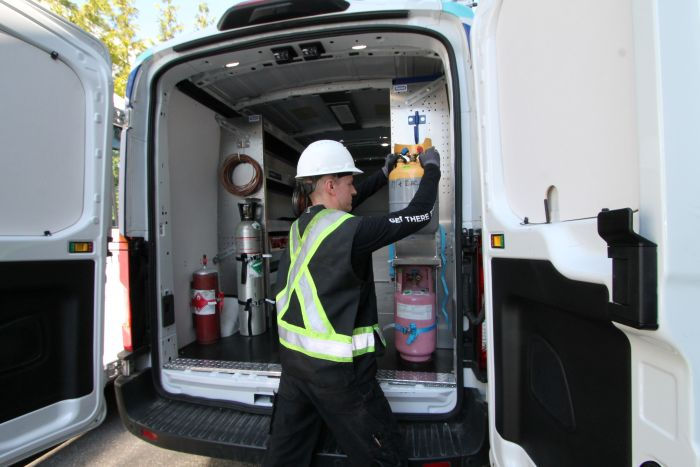
A service van is a mobile workspace, and the design of that workspace directly impacts technician productivity, safety, and consistency across the fleet. This makes upfit design an important part of the fleet strategy—not simply a purchasing decision.
Standardization Doesn't Mean One Supplier
Leading fleets generally approve two or three preferred manufacturers in each equipment category rather than relying on a single supplier. This improves purchasing leverage while maintaining supply chain flexibility and helps protect against product shortages or long lead times.
Rather than selecting individual products, organizations establish approved equipment platforms that can be deployed consistently regardless of which manufacturer supplies the equipment.
Building a Standardized Fleet Equipment Platform
Rather than selecting products one vehicle at a time, organizations establish corporate standards for key vehicle systems including:
Shelving and storage
Safety partitions
Cargo management
Power systems
Lighting
GPS and telematics
Ladder management
Liftgates
Trade-specific accessories
This is also the ideal stage to involve an experienced commercial vehicle upfitter.
Rather than waiting until vehicles have been ordered, the upfitter can work alongside fleet leadership to develop standardized layouts based on technician workflow. Their experience helps answer questions such as:
Where should the most frequently used tools be located?
How can technicians minimize bending, climbing, and unnecessary movement?
How should heavy equipment be positioned for safety and weight distribution?
How can storage capacity be maximized without sacrificing accessibility?
How can future technologies or equipment be accommodated?
Because upfitters work with technicians every day, they bring practical field experience that complements procurement and fleet management objectives. The result is a vehicle standard that not only controls cost but also improves technician efficiency, safety, and consistency across every operating company.

Turning Standards into Repeatable Fleet Deployments
Once the corporate standards have been established, the approved regional upfitter transforms them into complete fleet-ready vehicles by:
Procuring approved equipment from preferred manufacturers
Designing standardized technician workflow layouts
Engineering weight distribution and payload compliance
Integrating electrical and power systems
Installing, testing, and quality-checking every vehicle
This approach allows fleet managers to control standards without managing dozens of suppliers, engineering decisions, or installation details. It creates a repeatable deployment model that works equally well for scheduled factory orders, dealer-stock replacements, acquisitions, and emergency vehicle replacements.
Choosing the Right Fleet Management Company
A capable Fleet Management Company (FMC) helps centralize vehicle acquisition, lifecycle planning, maintenance, fuel management, reporting, and vendor coordination across multiple operating companies.
When paired with standardized upfit specifications and approved regional upfitters, the FMC becomes the operational backbone that keeps fleet deployment consistent regardless of geography.
Vehicle Replacement Requires Two Processes
Fleet standards should support both:
Planned factory-order replacements
Rapid deployment of dealer-stock vehicles needed for acquisitions, collisions, or unexpected growth
When vehicle layouts, equipment specifications, and approved manufacturers have already been standardized, replacement vehicles can be built quickly without redesigning every upfit from scratch.
Conclusion
The strongest fleet programs treat the vehicle as a standardized mobile workplace—not simply a purchased asset.
By combining corporate equipment standards, preferred manufacturers, Fleet Management Companies, and approved regional upfitters, private equity firms can build fleets that are easier to scale, faster to deploy, and more consistent across every operating company.
Just as importantly, involving an upfitter early in the planning process ensures that every vehicle is optimized for technician workflow, safety, and productivity, helping organizations realize operational efficiencies long after the acquisition is complete.


Comments