
The Technician Experience Is Becoming HVAC’s Competitive Edge

HVAC growth is accelerating, but technician experience is becoming the true competitive edge. Here’s why retention, efficiency, and fleet readiness now go hand in hand.
The vehicle is where that experience plays out.
For HVAC technicians, the work van isn’t just transportation — it’s a mobile workspace.
Every decision inside that space either reduces friction or creates it.
For business owners and fleet managers, optimizing technician experience starts with understanding how work actually gets done in the field.
Not in theory. In practice.
That means stepping beyond spec sheets and asking better questions:
How often is a technician reaching for tools?
What equipment needs to be accessed first, and fastest?
Where does fatigue show up during the day?
What creates delays between jobs?
What is the primary cause of health and safety claims?
The answers should shape how a vehicle is built.
Safety comes first.
Safety storage for tanks and tools isn’t optional — it protects the driver and ensures compliance. Clear sightlines, proper partitions, and well-mounted equipment reduce risk on every drive.
Comfort and ergonomics matter more than most fleets account for.
Repeated bending, climbing, and reaching adds up over a full day. Thoughtful shelving heights, easy access points, and clear walkways reduce strain and keep technicians moving efficiently.

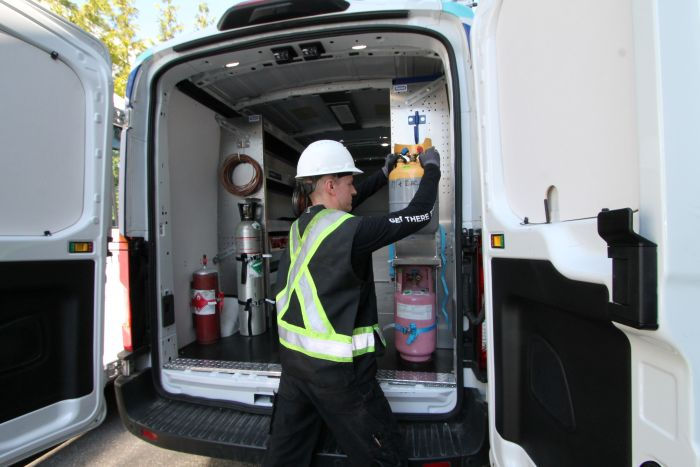
This HVAC van package includes tank holders, a partition, flooring, and organized storage.
Practicality drives performance.
If tools aren’t where they’re expected to be, time is lost. If layouts vary from vehicle to vehicle, onboarding slows down. Consistency across the fleet turns vehicles into repeatable systems — not one-off builds.
And the most overlooked piece:
Get technicians involved.
The people using these vehicles every day understand where time is wasted and where improvements can be made.
Their input leads to smarter layouts, better equipment choices, and stronger adoption across the team.
When technicians feel that a vehicle is built for them, not just assigned to them, you don’t just improve workflow — you improve retention.
Because at the end of the day, the goal isn’t just to outfit a vehicle. It’s to build an environment where technicians can do their best work —safely, efficiently, and consistently.


Comments